
Size of the target group you want to reach: Specific vs. Broad Audience
One of the most influential factors in determining the cost of your digital advertising campaign is which target group you want to reach.
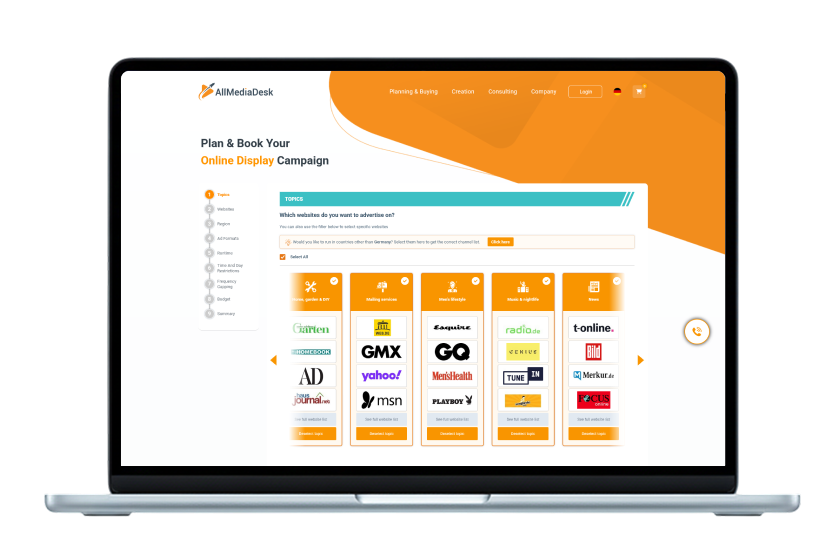
If you opt for a highly specific audience, such as a niche market or a particular demographic group, your CPM (Cost Per Thousand Impressions) will likely be higher. This is because websites charge a premium for advertising to more narrowly defined groups who are more likely to convert. However, the overall costs can remain low because you're targeting fewer people.
On the other hand, running a broad campaign with less precise targeting typically results in a lower CPM. Since you're casting a wider net, there's less competition for impressions, and you don't need to advertise on highly specific websites that can command higher CPMs due to their specialized content. Even if the price you pay per 1000 impressions is lower, if you want to reach a wide audience this normally requires a higher budget.
Just think of the following scenarios: Compare the campaign of an online store for kite equipment that only wants to reach people in the USA who go kite boarding with that of a brand for razors that wants to appeal to all men.
Even if the CPM that the kite store must pay to deliver its ads specifically to kitesurfers is higher, the total budget that it has to invest will be lower than that of the shaving brand, as the sheer number of kitesurfers in the US is significantly lower than the total the number of men in the US. Even if, on the CPM level, the price to deliver one thousand impressions to men is lower for the shaving brand, the total budget of the campaign will need to be higher to make sure every man in the US is reached.
Another example is running a hyperlocal campaign in only one city, which will obviously cost less then targeting the whole country. You can learn more about regional and local advertising opportunities here.