
User listens on an iPhone
Available data indicates that iPhone buyers tend to have higher incomes than Android users.
 United States (USD)
  Australia (AUD)
  Germany (EUR)
  Austria (EUR)
  Switzerland (CHF)
Please change the country to one that uses the same currency as used in the shopping cart using the menu in the top right hand corner and re-add the items to your shopping cart.

How can we help you?

Please change the country to one that uses the same currency as used in the shopping cart using the menu in the top right hand corner and re-add the items to your shopping cart.
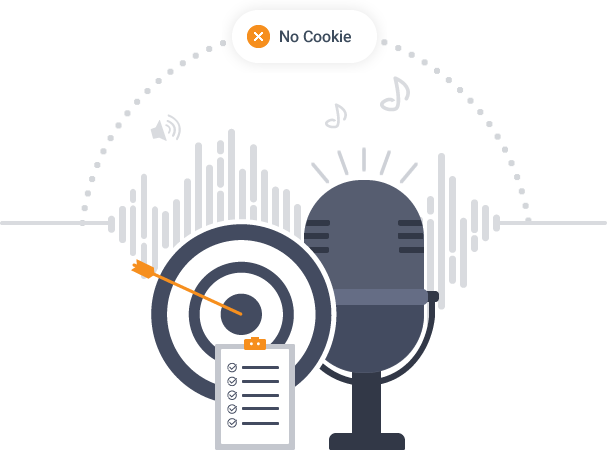
AllMediaDesk provides access to numerous data segments via its data marketplace, allowing advertising campaigns to be delivered more efficiently and more precisely. The DMP works without cookies as an identifier, which makes targeting possible even for users where no cookies can be set, as is the case for a large share of users in online audio.
Targeting uses different signals to estimate whether a person belongs to the audience of a campaign or not. This allows ads to be delivered more precisely to people who are likely to match the audience, helping advertisers use budgets more efficiently.
Below is a simplified example of how different signals can be combined to increase the likelihood that an ad is shown to the right listener.
Available data indicates that iPhone buyers tend to have higher incomes than Android users.

Official data shows that average income levels in Munich are significantly higher than in many other parts of Germany.
As a result, the probability rises that the listener has a higher income.

Studies generally show that audiences for classical music tend to have higher incomes than the overall population.
This again increases the likelihood that the listener belongs to a higher-income audience.

Because multiple signals point in the same direction, it becomes very likely that this user has a higher income. The campaign can therefore prioritize delivering the ad to this listener.
In online audio, a large share of listening happens on devices or in software environments where cookies cannot be set. This technology makes targeting across the entire inventory possible, allowing campaigns to reach far more people from the desired audience.
This targeting approach works completely without personal data. Instead, non-personal signals such as music preferences are used to connect data points. That makes the technology compliant with GDPR requirements and future-proof for a world without third-party cookies.