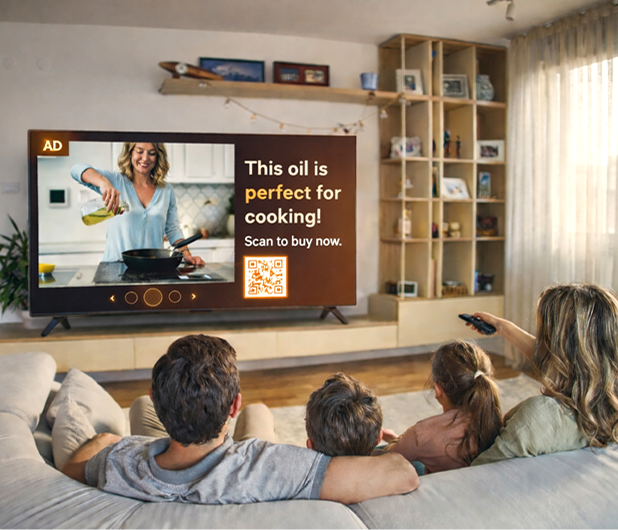

CTV (Connected TV)
The device and content environment, for example streaming via a smart TV.
 United States (USD)
  Australia (AUD)
  Germany (EUR)
  Austria (EUR)
  Switzerland (CHF)
Please change the country to one that uses the same currency as used in the shopping cart using the menu in the top right hand corner and re-add the items to your shopping cart.

How can we help you?

Please change the country to one that uses the same currency as used in the shopping cart using the menu in the top right hand corner and re-add the items to your shopping cart.
Learn how Connected TV and streaming ads work, and how brands use them to reach the right audience at scale.
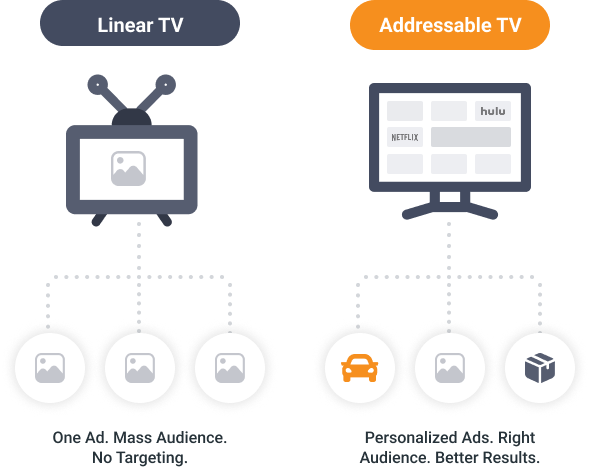
For decades, television advertising followed a simple model: one ad broadcast to millions of viewers at the same time, no matter who they were. This is known as linear TV. While effective for mass reach, it lacked precision. Everyone watching a show saw the same commercial, whether they were interested or not.
The growth of streaming services such as Disney+, Netflix, and Hulu, along with the rapid adoption of internet-connected TVs, has changed that. By delivering content over the internet to smart TVs and streaming devices, ads can now target specific households with tailored messages, just like digital ads on websites or social media.
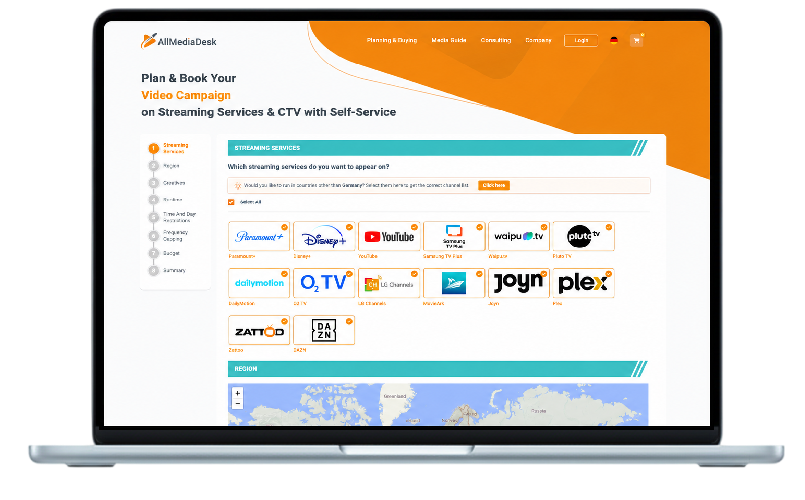
This shift makes addressable TV advertising possible, where different viewers watching the same content on platforms or TV channels can see different ads based on their interests, demographics, or location. And AllMediaDesk as a booking platform makes exactly that possible.
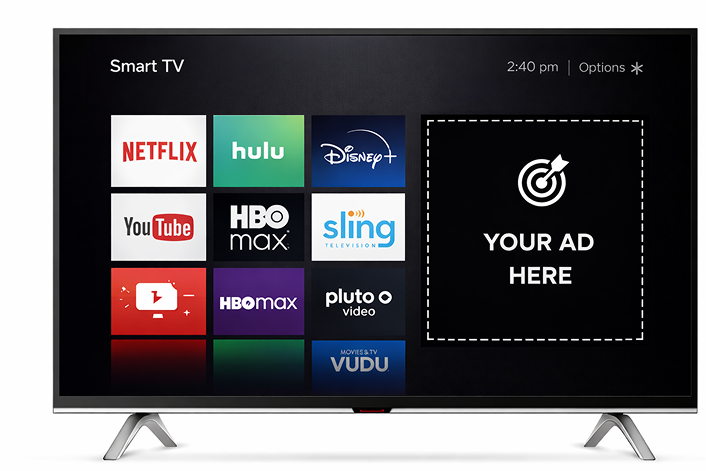
Connected TV advertising refers to video ads shown on TV devices within streaming content or apps on internet-connected televisions.
This includes:
Unlike traditional TV, where everyone sees the same thing, CTV ads can be targeted, personalized, and measured, making them highly effective for both brand awareness and performance marketing.
Besides ads on Connected TVs, we also offer advertisers the ability to book ads on streaming services such as Netflix, Disney+, Hulu, Peacock, Tubi, and Pluto TV.
While connected TV is defined by the device used to watch content, streaming video advertising focuses more on where the advertising is placed. In other words, it can run on well-known streaming services and around quality content regardless of the device. Streaming video ads can also play on mobile devices or computers, while CTV is limited to the TV screen.
Addressable TV advertising means showing different ads to different households, even during the same show, based on data such as location, interests, income, or behavior. It is one of the most significant changes in TV advertising history.
| Linear TV | Addressable TV |
|---|---|
| Same ad to all viewers | Different ads to different households |
| Broadcast model | Data-driven targeting |
| Limited measurement | Advanced metrics and insights |
While they often overlap, it is useful to distinguish:
The device and content environment, for example streaming via a smart TV.

The ad strategy that uses data to target specific households.
CTV enables addressable advertising, but the two terms are not exactly the same.

Refers to video content delivered over the internet, bypassing traditional cable or satellite. Think of Netflix, Hulu, or Disney+, these are OTT platforms.
One way viewers access OTT content, specifically via televisions.
(for example Netflix or Hulu)
(for example Smart TVs or Roku)
That is why you often see terms like CTV OTT, CTV advertising meaning, or OTT CTV meaning used together, they are part of the same ecosystem.
CTV has become a vital component in digital marketing strategies. It combines the big-screen impact and storytelling power of TV with the targeting, flexibility, and measurement of digital advertising.