
Geotargeting:
Narrow down delivery by country, region, or city.
 United States (USD)
  Australia (AUD)
  Germany (EUR)
  Austria (EUR)
  Switzerland (CHF)
Please change the country to one that uses the same currency as used in the shopping cart using the menu in the top right hand corner and re-add the items to your shopping cart.

How can we help you?

Please change the country to one that uses the same currency as used in the shopping cart using the menu in the top right hand corner and re-add the items to your shopping cart.
Connected TV (CTV) and streaming platforms have fundamentally changed how we think about TV advertising. In the world of linear TV, ads were broadcast to everyone watching a specific program regardless of who they were, where they lived, or what their interests might be. The same message reached millions, but with no real control over who saw it.
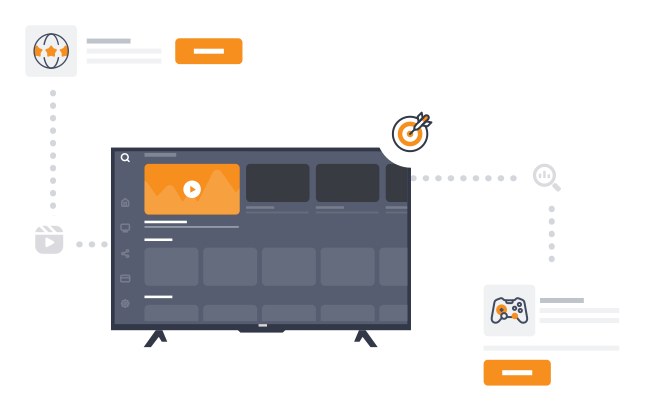
Narrow down delivery by country, region, or city.

Target smart TVs, gaming consoles, or specific operating systems.

Serve ads at specific times of the day, such as mornings or prime time.

Select specific streaming apps or CTV publishers for your ads.
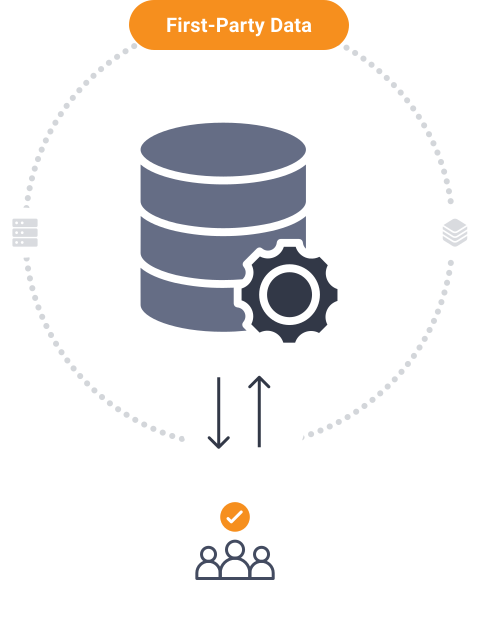
Some CTV publishers provide access to first-party data based on user behavior such as viewing habits, household characteristics, or genre preferences. While this sounds promising, the reality is more fragmented than it might seem:
So while first-party data can offer precision, it can also reduce the scale and consistency of a campaign especially across multiple streaming services. First-party data targeting is currently not available through our self-service platform. If you are interested in these options, please contact our team.
Another available option is contextual targeting, which allows advertisers to place their ads based on the nature of the content being viewed, for example, showing a sports-related ad during a live match or reaching families during a movie night.
In theory, this offers a privacy-friendly and content-safe approach to reach relevant audiences. However, contextual targeting is still not widely implemented across all CTV platforms, partly due to technical limitations and the fragmented nature of inventory. In many cases, publishers offer contextual packages only with minimum spends but are not always available for self-service or at scale.
One of the key differences between digital video and CTV is how content is consumed. While digital ads are often shown to individuals on personal devices, CTV is usually watched by multiple people at once families, roommates, or couples gathered around the TV.
This raises questions about the value of personalized advertising in CTV environments. Instead of targeting individuals, advertisers increasingly think in terms of households or shared viewing groups. The result is less focus on one-to-one personalization and more emphasis on ad impact, creative relevance, and broad reach.
At AllMediaDesk, we offer advertisers easy access to premium CTV and streaming inventory across multiple platforms. Our self-service portal supports time, date, geo, and app/channel targeting, making it simple to run campaigns with precision and control.
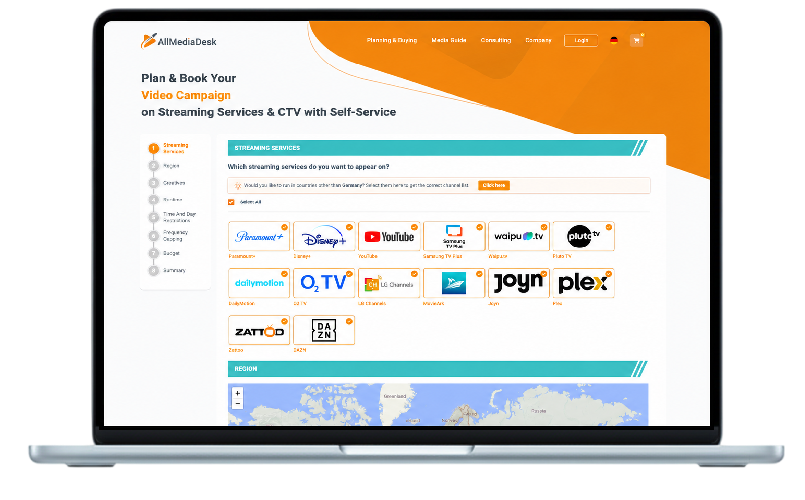
If you are looking to run targeted campaigns in the CTV or streaming environment, try our self-service solution.
 Start planning your streaming and CTV campaign now!